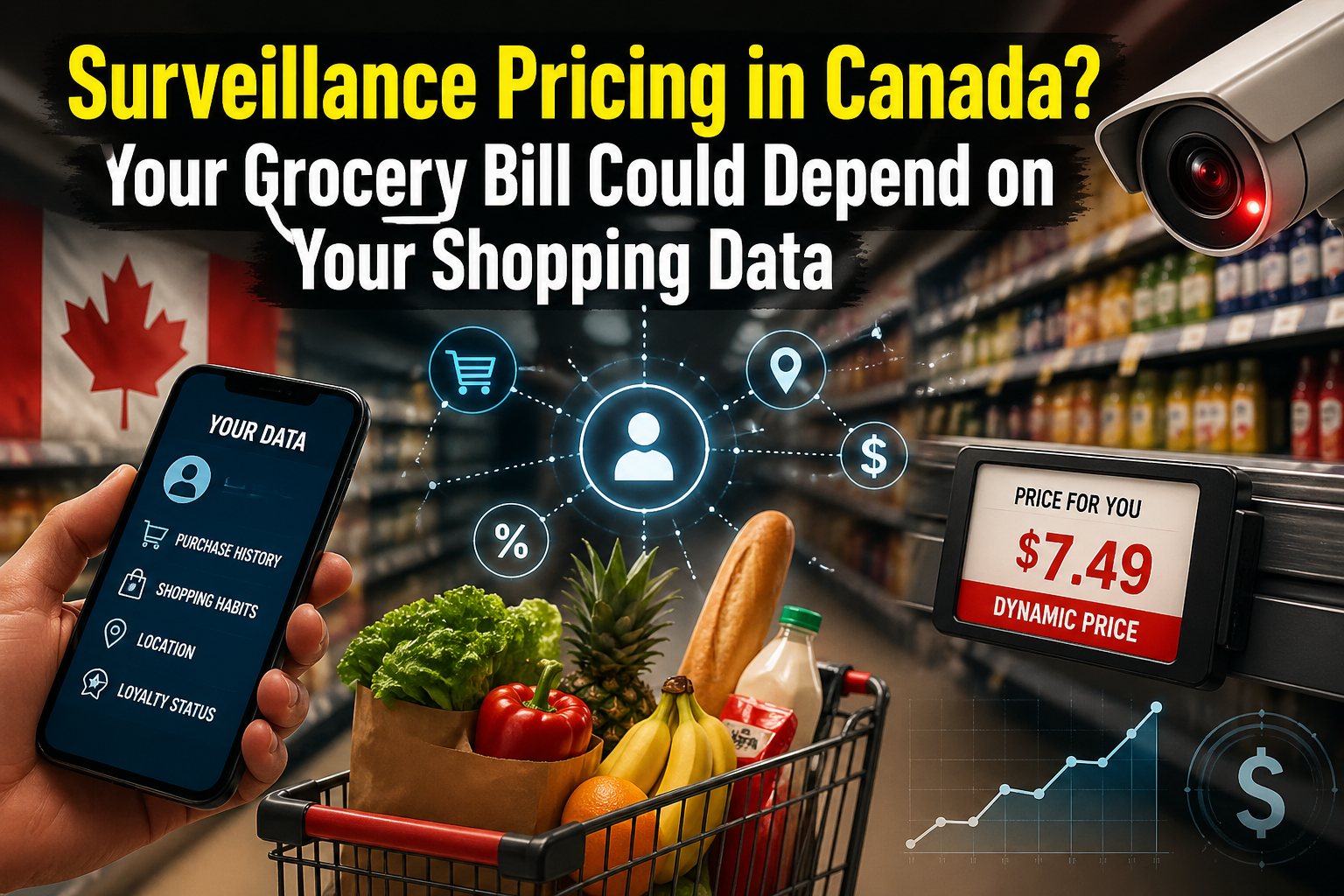
People of Canada are already struggling with rising grocery bills, higher housing rates, and pressure on monthly budgets. Now, a new issue is going to begin soon that is: Surveillance pricing in Canada. As it is clear by the name itself a system where stores may use customer data, shopping habits, loyalty cards, mobile apps, and digital tools to set what prices shoppers see on the products.
People expect grocery prices should be simple and transparent. Now the problem is that due to this new pricing system one customer pays more than another for the same product that would be unfair. This would happen because of data collected behind the scenes, it will create concerns towards the privacy and transparency. Now the new Surveillance pricing model is still being a debate topic among the Canadian people on social media platforms. Experts are also sharing the opinions on this.
Below in this article we have explained what surveillance pricing means, What impact it could make on Canadians, why it matters, and what shoppers should know.
What Is Surveillance Pricing in Canada?
Surveillance pricing is a plan where a business uses customer details to set prices of products for individuals or groups. Instead of the same price to everyone, a company may use data to decide how much a person can pay for the product.
Read More: Ontario Property Tax Explained: Rates, Rules & What Homeowners Need to Know
Your purchase history, shopping frequency, location, app activity, browsing behavior, and loyalty card usage details will be the used to fix the price. In easy words, if a system thinks you are ready to buy something at a higher price, you will not get the best offers for that product.
For example, if a customer regularly buys the same product every week may continue seeing a higher price whereas if another customer who often compares brands may receive any offer to on the product.
This is the reason why people are questioning about Canada grocery prices and whether future pricing systems will remain fair.
Why Is This Topic Important in Canada?
In Canada, food and grocery prices are always one of the biggest concerns for many families. Even a small price hikes on milk, eggs, vegetables, bread, and meat can affect their monthly budgets. Families across Canada are already looking for better offers, coupons, and discount stores.
If surveillance pricing becomes common, it could make harder your monthly budgets. People are confused and they want to know whether they will get a fair price or pay more because of this new pricing system.
Must Read: Canada OAS Clawback 2026: Income Limits, Recovery Tax & Payment Impact
This topic is really important especially in Canada because grocery expenses have increased in past few years. Consumers are already sensitive to inflation, so any new pricing model receives strong public attention.
How Grocery Stores Could Use Shopping Data
Modern grocery stores are using advanced technologies, mobile apps, online ordering systems, rewards programs, and digital shelf labels. These tools collect large amounts of customer data also.
Now stores could collect data in several ways to know what products customers purchase most often, and at what time they shop usually. Along with this it could also fetch details like how fast they respond to offers, or whether they switch brands when prices rise.
A customer who always purchases the same milk brand might be seen as less price concerned. But another shopper who buys only discounted products may receive more promotions. This is how your grocery bill could vary as per your shopping data.
The Evidence Behind the Debate
The current discussion around surveillance pricing is based largely on existing retail technology trends rather than confirmed widespread use of individualized grocery pricing in Canada. Here is the evidence chain behind the debate.
Retailers Already Collect Customer Data
Modern grocery retailers use digital systems that gather information about customer behavior. Loyalty programs, apps, online shopping platforms, and promotional emails already track shopping activity to improve marketing and customer engagement.
Personalized Promotions Already Exist
Many Canadians already receive:
- App-only discounts
- Personalized coupons
- Loyalty-member pricing
- Targeted reward offers
This form of personalized marketing is common across retail industries.
AI and Dynamic Pricing Technology Are Expanding
Retailers worldwide are increasingly using AI systems to help manage:
- Inventory
- Supply chains
- Product demand
- Promotional timing
- Competitive pricing
Digital shelf labels also allow stores to change prices more quickly than traditional paper tags.
Consumers Worry About Future Pricing Models
These technologies could, in effect, one day allow companies to sell products at various prices to individual customers based on their shopping behaviors and histories. For now, such fears seem speculative. However, experts say the discussion is important now because pricing technology is advancing rapidly.
Latest Update: Maximum CPP Contribution Rates 2026: New Limits, Changes & Deposit Updates
AI Role and Digital Price Tags
Artificial intelligence plays a vital role in retail worldwide. Pricing software react quickly to collect details like competition, weather, supply shortages, or customer behavior.
Digital shelf labels help software to make it easy. Instead of printing paper price tags, stores can update prices electronically through these labs. It means prices can change quickly and frequently as per the customer.
According to the supporters it can help stores offer faster promotions in future whereas critics believe it could also make pricing less transparent if customers do not understand why prices are changing.
What It Means for Shoppers
For Shoppers, this means that pricing would be highly customized in some situations, leading to predictable pricing overall. In many cases, the best deal would not apply to all customers, but would be linked to some type of loyalty program, app, or customer profile. This approach could help some customers, but may also result in higher prices for other customers.
With respect to groceries, this issue becomes significant in light of the regularity of purchases and the necessity of groceries to one’s budget. Even small fluctuations in prices can accumulate significantly over a period of one month.
Helpful Guide: Buying a Rental Property in Canada: Costs, Mortgage Rules & Smart Tips
Could There Be Benefits?
Surveillance pricing in Canada do not have only negative issues. Experts also believe that data-based pricing can also be useful for budget savings.
Stores may use customer data to offer discounts, reward points and to reduce waste on products which are going to expire soon. The main concerned is whether the system is transparent and fair. If customers get the right to choose privacy settings and understand how the discount work concerns may be minimized.
Is It Legal in Canada?
Canada has privacy and consumer protection laws. Whether surveillance pricing becomes controversial or not will depend on the practices of companies.
Regulators may ask questions like what details company will gather of customers do they agree for the data collection or not? Some other important question may also be asked such as how fairly customers are being treated how well the discounts are explained to the shoppers?
What consumers can do
There are several ways consumers can reduce the amount of data collected by retailers and improve price transparency. Most importantly, one needs to make sure that he compares prices, limits unnecessary tracking by applications, and notices when a discount is public or loyalty-based.
- Compare prices across stores before buying.
- Use loyalty apps only when the savings are clear.
- Review app permissions and privacy settings.
- Avoid saving payment details unless necessary.
- Shop on secure sites and networks, especially online
Check Now: Good Credit Score in Canada: What Score You Need for Loans & Mortgages
Protect Your Data
Canadians should be cautious about how much personal information they share with stores. A good rule is to treat retail apps like data-sharing tools, not just coupon tools. If an app asks for location, browsing, or other permissions that are not essential to checkout or delivery, it is reasonable to deny them. Consumers in Canada can ask how their data is collected, used, and shared under existing privacy rules.
Wrap-Up
Surveillance pricing in Canada is technology based story. How well it will work would depend on the trust between stores and customers. Daily grocery shopping is a basic requirement, so Canadians are highly concerned about pricing.
Your grocery bill may vary on the products you buy, not on hidden assumptions calculated by algorithms. Retailers are ready to adopt smarter systems but the same time people are more likely demanding for transparency.
As of now, the best approach is to stay informed, and compare pricing, to understand how your shopping data may be used.
Sources
This article is based on verified financial reports, expert analysis, and recent developments related to surveillance pricing and consumer data usage in Canada and globally.

Nishant believes that access to clear financial information is a right, not a privilege. His articles consistently prioritize accuracy, transparency, and practical value — helping seniors, families, and working individuals stay on top of payment dates, eligibility changes, and benefit updates.
All content published by Nishant is research-based and sourced from verified government portals including SSA.gov, Canada.ca, CRA.gc.ca, and official provincial government websites.
- Minimum Wage Canada 2026: Full Province-by-Province Breakdown - June 18, 2026
- Ontario GAINS Payment Dates 2026: Full Schedule, Amount & Eligibility Details - June 18, 2026
- Is There VAT in Canada? GST, HST & Sales Tax Explained - June 18, 2026