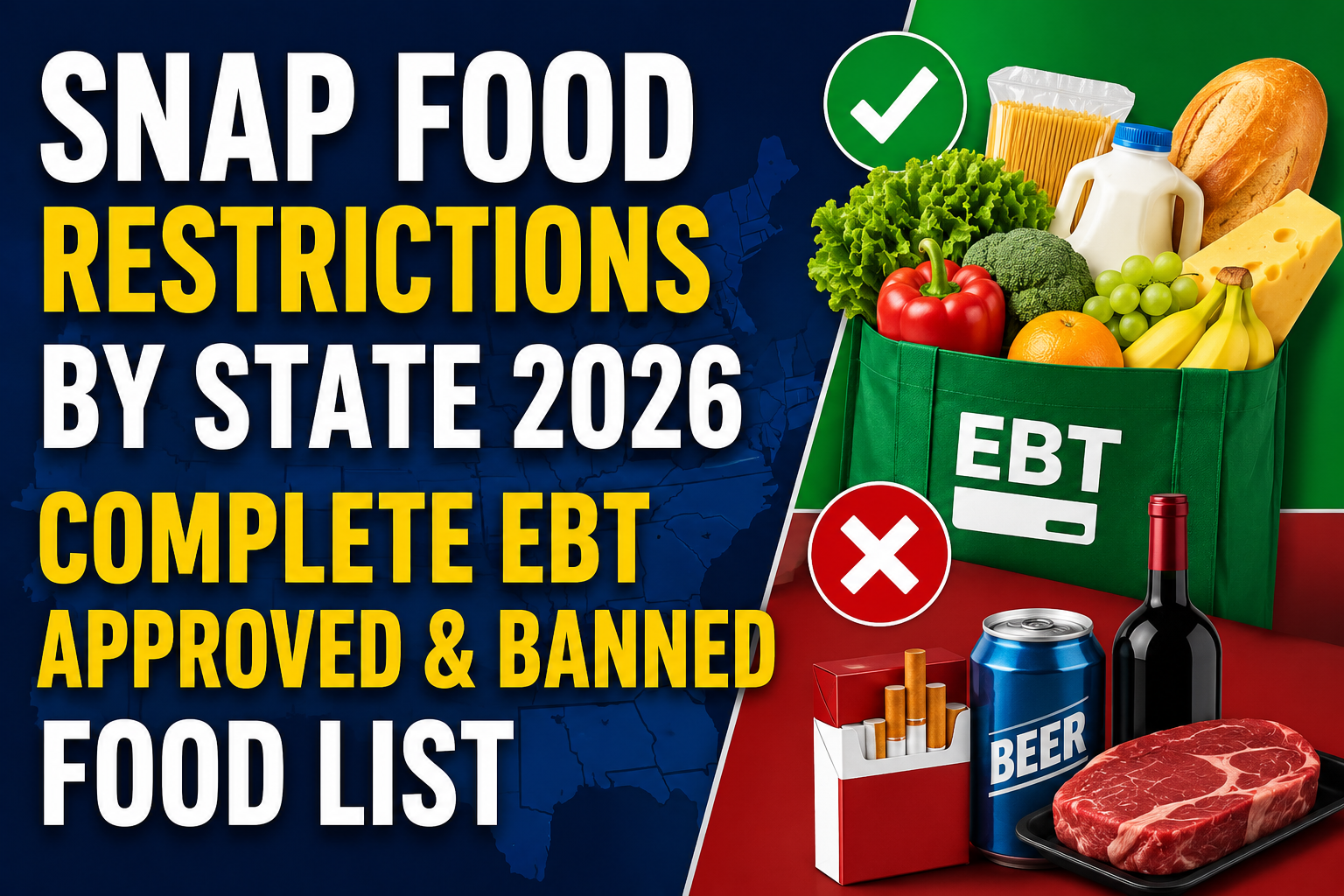
SNAP Food Restrictions by State 2026: There are many changes taking place with regard to the Supplemental Nutrition Assistance Program (SNAP) in 2026, as a number of states adopt food restriction waivers that have been approved by the USDA. States are permitted to restrict purchasing of certain products like soda, candies, energy drinks, and other sweetened drinks under SNAP program benefits through the use of food restrictions waivers.
While the federal rules concerning SNAP are still the basis of the program in the country, a few states have gone further to introduce more rules that dictate which foods may not be bought using an EBT card.
Since such policies are implemented at a state level, there is no one set of banned foods at the national level. SNAP recipients should understand both the federal rules and any additional restrictions adopted in their state.
Which Foods Are Approved By SNAP Nationally?
Federal SNAP rules continue to allow the purchase of most grocery food items.
Fruits and Vegetables
SNAP benefits can be used for:
- Fresh fruits and vegetables
- Frozen fruits and vegetables
- Canned fruits and vegetables
- Dried fruits and vegetables
👉 Learn how to keep your EBT card and benefits safe by reading Protect Your SNAP Benefits.
Protein Foods
Approved protein foods include:
- Beef, pork, poultry, and seafood
- Eggs
- Tofu
- Nuts and seeds
Dairy Products
Eligible dairy products include:
- Milk
- Cheese
- Yogurt
- Butter
- Plant-based milk alternatives
Grains and Staple Foods
SNAP recipients can purchase:
- Bread
- Rice
- Pasta
- Oatmeal
- Breakfast cereals
- Tortillas
Pantry Essentials
Approved pantry items generally include:
- Flour
- Sugar
- Cooking oils
- Spices
- Condiments and sauces
Seeds & Food-Producing Plants
Federal SNAP rules also allow households to purchase seeds and plants that produce food for home consumption.
Which Foods and Products Are Always Banned Under SNAP?
Under federal law, SNAP is never allowed to buy:
- Alcoholic beverages
- Tobacco products
- Cigarettes/vaping supplies
- Vitamin/health supplements that bear a Supplement Facts panel
- Ready-to-eat hot foods
- Pet food
- Disinfectants/household supplies
- Sanitary paper products
- Toiletries
This list remains the same irrespective of any state-specific waivers.
👉 Find out how disaster food assistance works in What Is D-SNAP?.
SNAP Food Restrictions by State 2026
Several states have received USDA approval to implement additional SNAP food restrictions.
| State | Primary Restricted Categories |
|---|---|
| Indiana | Soft drinks and candy |
| Iowa | Certain taxable foods, candy, and sweetened beverages |
| Nebraska | Soda and energy drinks |
| Utah | Soft drinks |
| West Virginia | Soft drinks and candy |
| Idaho | Soda and candy |
| Oklahoma | Soft drinks and candy |
| Louisiana | Soft drinks, energy drinks, and candy |
| Texas | Candy and certain sweetened beverages |
| Virginia | Sweetened beverages |
| Florida | Soda, energy drinks, candy, and certain desserts |
| Colorado | Soft drinks |
| Arkansas | Soda, candy, and certain low-juice beverages |
| Tennessee | Certain sugary beverages and selected processed foods |
| Hawaii | Soft drinks |
| South Carolina | Candy, soft drinks, energy drinks, and sweetened beverages |
| North Dakota | Soft drinks, energy drinks, and candy |
| Missouri | Certain desserts, beverages, and candy (implementation subject to state guidance) |
Always verify current implementation details through your state SNAP agency and USDA guidance.
👉 Check benefit deposit dates across the country in EBT Payment Schedule by State.
State Restriction Categories at a Glance
The restrictions vary significantly from state to state.
| Restriction Type | Example States |
| Soft Drinks Only | Utah, Colorado, Hawaii |
| Soft Drinks and Candy | Indiana, Oklahoma, West Virginia, Idaho |
| Soda, Candy, and Energy Drinks | South Carolina, North Dakota, Nebraska, Louisiana |
| Broader Restrictions | Iowa, Florida, Tennessee |
This comparison highlights how SNAP rules can differ depending on where a household lives.
Why Do States Place Restrictions on Certain Food Items?
USDA waivers allow states to submit requests for waivers which will assist in encouraging healthy buying behavior from SNAP participants. Those who support food item restrictions state that the government’s role in aiding people financially in order to help them make nutritional decisions makes sense. However, opponents of such restrictions say that these may complicate administration of the program. Every request submitted is evaluated independently by USDA before approval.
How These Changes Affect SNAP Recipients
The actual effects on most families could well be less dramatic than advertised. Core groceries like produce, dairy, grains, meats, and other essentials continue to qualify under the SNAP program across the country. However, in states with an approved waiver, recipients will find that their ability to purchase:
- Soda drinks
- Candies
- Energy drinks
- Specific types of beverages
- Certain dessert items
Therefore, families may need to adjust shopping habits or use another payment method for restricted items.
Checkout Process
Retail stores accepting SNAP are expected to ensure that their systems are capable of identifying restricted products.
When a cart is filled with both eligible and restricted items:
- Eligible items will be paid for with SNAP benefits.
- Restricted items will not qualify for EBT payments.
- The remaining balance is to be paid by an alternative payment source.
This process is commonly referred to as a split-tender transaction.
👉 Explore the latest program updates and payment details in SNAP Benefits 2026.
Important SNAP Changes in 2026
The waivers for the year 2026 will constitute some of the biggest changes in the state’s SNAP policies.
Some major changes have been made including:
- More state flexibility regarding what is allowed to be purchased.
- Leveraging of the USDA’s waiver powers.
- A greater emphasis on soda and candy products.
- State-based initiatives rather than nation-wide bans.
Due to differences in implementation, one should stay up-to-date through regular communication with the SNAP office in his/her state throughout the year.
Wrapping-up
SNAP food restrictions have become more complicated with the introduction of waiver programs approved by the USDA in many states. Although staple groceries qualify for inclusion across all states, there are states that do not allow some foods like soft drinks, candies, energy drinks, and sugary beverages.
It is always best to check guidelines on your state’s SNAP program through the USDA Food and Nutrition Service. This will make shopping with SNAP easier and more efficient.
👉 Review current household income requirements and eligibility rules in New Jersey SNAP Income Limits.
FAQ’s
Which states have SNAP food restrictions in 2026?
There are various restrictions on foods such as soda, candy, energy drinks, and sweetened beverages in several states that have received USDA approval for this program.
Do the new food restrictions limit the purchase of soda and candy?
This depends on your state. In some states, you are free to purchase these foods with your EBT card while others have restrictions due to approved SNAP waiver programs.
What foods are still approved under SNAP?
Many of the common staple foods qualify for SNAP and these include meat, poultry, fish, dairy, fruits, vegetables, bread, rice, pasta, and cereals.
Where can I find my state’s SNAP rules?
Visit your state’s SNAP agency website or the www.fna.usda.gov for the latest eligibility and food restriction information.
Official Sources
- USDA SNAP Food Restriction Waivers: https://www.fns.usda.gov/snap/waivers/foodrestriction
- USDA SNAP Eligibility Rules: https://www.fns.usda.gov/snap/recipient/eligibility
- USDA SNAP Program Information: https://www.fns.usda.gov/snap
- State SNAP Agency Directory: https://www.fns.usda.gov/snap/state
Disclaimer
This article is for informational purposes only. SNAP policies, waiver approvals, implementation dates, and product classifications may change. Always verify current SNAP rules with your state agency and USDA before making purchasing decisions.

Ritika's writing philosophy is built on one core principle: every person deserves access to clear, accurate, and actionable benefit information — without having to wade through confusing government language. Her guides are trusted by seniors, working families, and low-income households across North America who rely on timely payment updates and eligibility information.
All content written by Ritika is thoroughly research-based, sourced from official government portals including SSA.gov, Canada.ca, and CRA publications.